
Limited Edition Apparel: Fandom, Value, and Impact
Choosing the right piece of limited edition apparel often means sifting through hype, rumors, and real emotion. For fans of anime, gaming, and horror, the search is more than a shopping trip—it is about claiming something that speaks to your identity and connection with fan communities across the world. Limited edition apparel taps into the need for both uniqueness and belonging, making every drop an event that blends style with cultural meaning. This deep dive clears up what really defines these exclusive pieces and why they matter to collectors and trendsetters alike.
Table of Contents
- Defining Limited Edition Apparel And Misconceptions
- Types Of Limited Edition Releases And Their Distinctions
- How Limited Edition Apparel Drives Fandom
- Key Characteristics: Scarcity, Exclusivity, And Storytelling
- Risks And Challenges In Limited Edition Retail
- Alternatives To Limited Edition Apparel
Key Takeaways
| Point | Details |
|---|---|
| Limited Edition Apparel Represents Unique Experiences | These garments transcend traditional clothing, offering emotional and cultural significance that connects consumers to their identities and communities. |
| Types of Releases Enhance Consumer Appeal | Different approaches like quantity-limited and collaborative editions create urgency and drive engagement by tailoring to specific consumer interests. |
| Fandom Driven by Emotional Connection | Limited edition apparel deepens fandom by serving as identity markers, cultivating emotional investment and community belonging among fans. |
| Alternative Models Prioritize Sustainability | Clothing rental, second-hand shopping, and customizable platforms offer innovative, environmentally-conscious approaches that challenge traditional scarcity-driven strategies. |
Defining Limited Edition Apparel and Misconceptions
Limited edition apparel transcends traditional clothing categories by offering unique, strategic products that blend exclusivity, emotional connection, and cultural significance. More than just rare items, these garments represent a complex intersection of fashion, identity, and consumer psychology. Strategic product positioning reveals that limited editions are carefully designed to create profound consumer experiences.
At its core, limited edition apparel is characterized by several key attributes:
- Intentional scarcity and restricted production numbers
- Unique design elements not found in standard collections
- Time-sensitive or quantity-restricted availability
- Enhanced emotional and identity-expressive value
- Strategic brand differentiation
Contrary to popular misconceptions, limited edition products are not merely about creating artificial demand. Academic research on product uniqueness demonstrates that these items serve deeper psychological functions. They allow consumers to express individual identity, feel part of an exclusive community, and connect with broader cultural narratives.
Limited edition apparel represents more than a purchase - it’s an experience of belonging and self-expression.
Understanding these nuanced dynamics helps fans and collectors appreciate the true value of limited edition pieces. These aren’t just clothing items; they’re cultural artifacts that reflect personal style, fandom commitment, and contemporary artistic expressions.
Pro tip: When evaluating limited edition apparel, look beyond rarity and consider the emotional and cultural significance embedded in the design.
Types of Limited Edition Releases and Their Distinctions
Limited edition releases represent a sophisticated marketing strategy that goes far beyond simple product scarcity. Diverse scarcity classification methods reveal complex approaches to creating unique consumer experiences through strategic product positioning.
The primary types of limited edition releases include:
-
Quantity-Limited Releases (LQS)
- Strictly controlled production numbers
- Creates immediate collector urgency
- Generates high perceived value
-
Time-Limited Releases (LTS)
- Available only during specific periods
- Often tied to seasonal or event themes
- Drives immediate consumer action
-
Collaborative Editions
- Artist or designer partnerships
- Cross-brand promotional releases
- Introduces unique creative perspectives
Collaborative Limited Editions represent a particularly fascinating category. Luxury brand collaboration strategies demonstrate how these releases leverage creative partnerships to generate unique storytelling opportunities and target specific consumer segments.
Limited edition releases are not just products - they’re cultural narratives waiting to be discovered.
These strategic releases transform traditional retail experiences by creating emotional connections that transcend typical consumer-product relationships. By carefully designing scarcity and exclusivity, brands can generate significant consumer excitement and engagement.

Pro tip: Always research the backstory and creative vision behind limited edition releases to fully appreciate their unique value.
How Limited Edition Apparel Drives Fandom
Fandom culture thrives on emotional connection, and limited edition apparel serves as a powerful catalyst for deepening these relationships. Psychological drivers of fan engagement reveal how exclusive merchandise transforms casual interest into passionate community involvement.
The key mechanisms driving fandom through limited edition apparel include:
-
Identity Signaling
- Communicates belonging to a specific fan community
- Demonstrates depth of commitment
- Creates visual social recognition
-
Emotional Investment
- Transforms merchandise into personal memorabilia
- Represents shared cultural experiences
- Generates strong narrative connections
-
Collector Motivation
- Stimulates acquisition desire
- Creates competitive collecting dynamics
- Builds long-term brand loyalty
Cultural impact of fandom merchandise demonstrates that limited edition apparel goes far beyond simple clothing. These pieces become tangible representations of fans’ passion, serving as conversational artifacts that connect individuals across geographic and social boundaries.
Limited edition apparel isn’t just clothing - it’s a membership card to an exclusive cultural experience.
By carefully crafting releases that resonate with specific fan communities, brands can transform passive consumers into active, engaged participants who feel deeply connected to the narrative and aesthetic of their favorite franchises.
Pro tip: Collect limited edition pieces that genuinely speak to your personal connection with the fandom, not just for potential resale value.
Key Characteristics: Scarcity, Exclusivity, and Storytelling
Limited edition apparel represents a sophisticated cultural phenomenon that extends far beyond traditional retail strategies. Psychological dimensions of product scarcity reveal how these unique items generate profound consumer engagement through strategic design and emotional resonance.
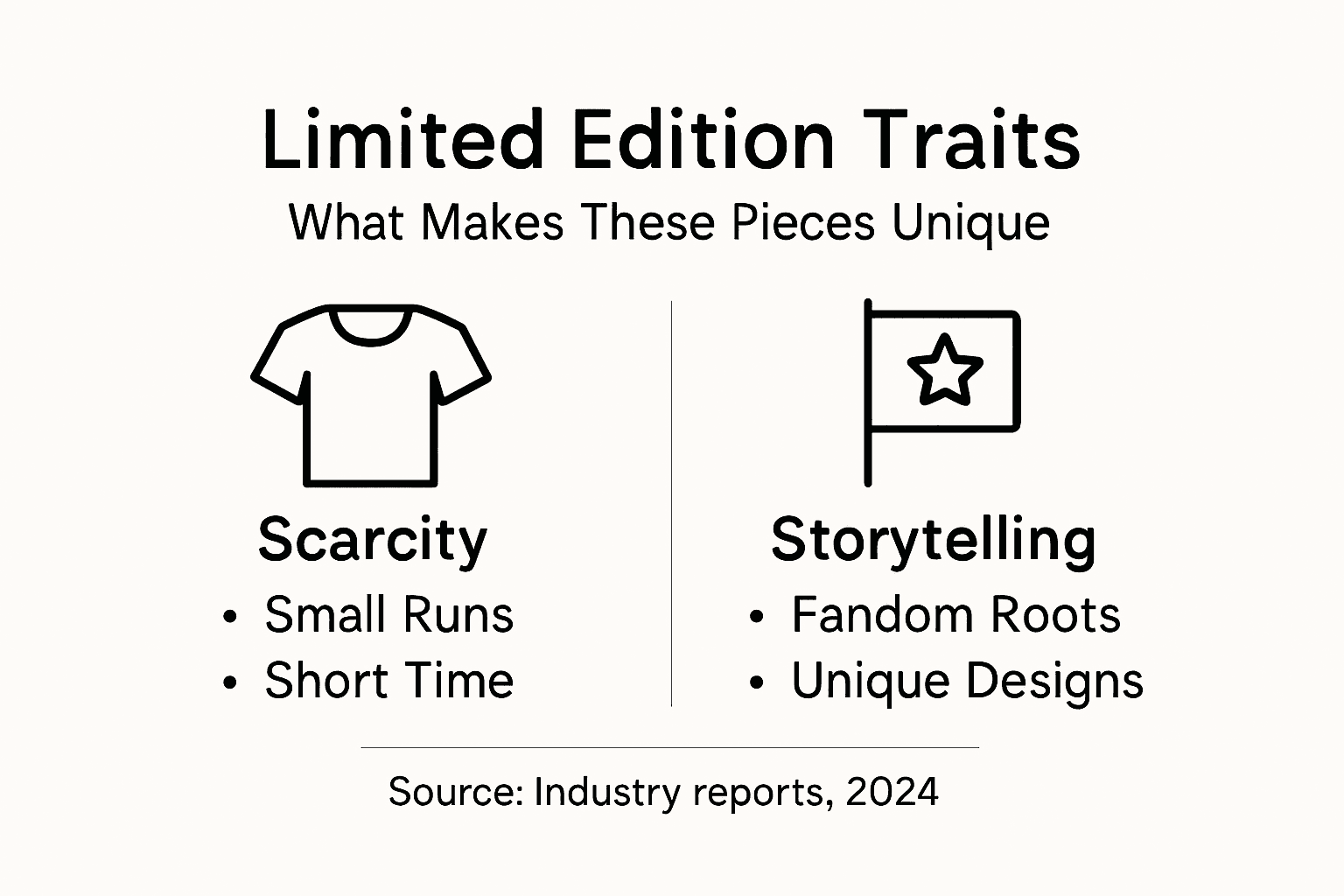
The core characteristics of limited edition apparel include:
-
Scarcity Principle
- Creates immediate purchasing urgency
- Increases perceived product value
- Triggers psychological desire for rare items
-
Exclusivity Dynamics
- Signals social status and insider membership
- Differentiates consumers from mainstream audiences
- Provides emotional validation
-
Narrative Storytelling
- Transforms clothing into cultural artifacts
- Embeds deeper meaning beyond physical design
- Connects consumers through shared experiences
Consumer psychology of limited editions demonstrates how these characteristics work synergistically to elevate merchandise from simple clothing to powerful identity markers. The intentional crafting of rarity generates an emotional landscape where consumers feel uniquely connected to their chosen apparel.
Limited edition apparel isn’t just about what you wear - it’s about the story you tell.
By understanding these intricate psychological mechanisms, brands can create deeply resonant products that transcend traditional consumer-product relationships, transforming simple garments into meaningful cultural statements.
Pro tip: Invest in limited edition pieces that genuinely reflect your personal narrative and cultural connections.
Risks and Challenges in Limited Edition Retail
Limited edition retail strategies involve complex psychological and economic dynamics that can significantly impact brand perception and consumer trust. Strategic risks of product scarcity reveal the delicate balance brands must maintain between exclusivity and accessibility.
The primary challenges in limited edition retail include:
-
Distribution Complexity
- Uneven product accessibility
- Potential consumer frustration
- Risk of perceived unfairness
-
Brand Loyalty Risks
- Potential alienation of dedicated fans
- Reduced repeat purchase likelihood
- Damage to long-term brand reputation
-
Market Expectations
- Managing consumer anticipation
- Balancing scarcity with demand
- Avoiding artificial manufacturing limitations
Negative consequences of rapid sell-outs demonstrate how immediate product unavailability can transform excitement into consumer disappointment. Brands must carefully navigate the fine line between creating desirability and generating genuine accessibility.
True exclusivity isn’t about making products impossible to obtain - it’s about creating meaningful, memorable experiences.
Successful limited edition strategies require transparent communication, fair distribution methods, and a nuanced understanding of consumer psychology. By anticipating potential challenges, brands can design releases that genuinely enhance rather than diminish consumer engagement.
Here is a summary of potential risks for brands and consumers in limited edition retail:
| Risk Type | Brand Challenge | Consumer Impact |
|---|---|---|
| Distribution | Logistics and fairness issues | Frustration, missed opportunities |
| Brand Loyalty | Alienating core supporters | Diminished trust and loyalty |
| Market Expectations | Balancing hype with supply | Disappointment from fast sellouts |
| Scalping | Unintended resale marketplaces | Higher aftermarket prices |
Pro tip: Always develop a comprehensive distribution strategy that prioritizes fan experience over artificial scarcity.
Alternatives to Limited Edition Apparel
Beyond traditional limited edition strategies, emerging fashion alternatives offer innovative approaches to consumer engagement and sustainability. Circular fashion consumption models are transforming how fans interact with apparel by providing more flexible and environmentally conscious options.
Key alternatives to limited edition apparel include:
-
Clothing Rental Services
- Temporary access to exclusive designs
- Reduced environmental impact
- Lower financial commitment
-
Second-Hand Marketplace
- Extended product lifecycle
- More affordable collector options
- Sustainable consumption approach
-
Customizable Apparel Platforms
- Personalized design experiences
- Unlimited production possibilities
- Direct consumer creative involvement
Sustainable fashion alternatives demonstrate that consumer preferences are shifting towards more adaptable and environmentally responsible clothing options. These models challenge traditional scarcity-driven marketing by prioritizing accessibility, creativity, and ecological considerations.
Here’s a comparison of limited edition apparel with popular alternative consumption models:
| Model | Accessibility | Environmental Impact | Consumer Experience |
|---|---|---|---|
| Limited Edition Apparel | Highly restricted | High resource consumption | Status and emotional value |
| Clothing Rental | Broad access | Lower due to reuse | Trend flexibility |
| Second-Hand Marketplace | Variable, depends on demand | Reduces waste and emissions | Affordable entry to collecting |
| Customizable Platforms | Unrestricted by design | Moderate, depends on choices | Personalized creative input |
Innovation in fashion isn’t about limiting access - it’s about expanding possibilities.
By embracing these alternative approaches, brands can create more inclusive, sustainable, and engaging consumer experiences that go beyond the traditional limited edition model.
Pro tip: Explore multiple consumption models to find the most personally and environmentally meaningful approach to collecting apparel.
Elevate Your Fandom with Exclusive Limited Edition Apparel
Are you ready to express your unique identity and show your deep commitment to your favorite fandoms through apparel that truly resonates? Limited edition clothing captures the essence of scarcity and storytelling, making each piece a meaningful cultural artifact—not just simple merchandise. At IGZ Clothing, we understand the importance of emotional investment and exclusivity in fandom culture. Our carefully curated collections of graphic t-shirts, hoodies, and accessories bring you trending designs inspired by anime, gaming, comic books, and more, giving you access to exclusive styles that symbolize your passion.
Discover how our limited edition drops empower you to stand out with authentic pieces that connect you to the larger fan community. Don’t miss your chance to own apparel that tells your story. Explore our full range today at IGZ Clothing and embrace the power of exclusive fandom-based apparel available only for a limited time. Act now to unlock 30 percent off plus free shipping and make your collection unforgettable.
Frequently Asked Questions
What defines limited edition apparel?
Limited edition apparel is characterized by intentional scarcity, unique design elements, time-sensitive availability, and emotional significance. These garments serve as more than just clothing; they reflect identity and cultural narratives.
How do limited edition releases drive consumer engagement?
Limited edition releases create urgency through scarcity and exclusivity, leading to emotional investment and identity signaling among consumers. This fosters a sense of belonging within specific fan communities.
What are the types of limited edition releases?
The primary types include quantity-limited releases, time-limited releases, and collaborative editions with artists or designers. Each type employs different strategies to create unique consumer experiences and storytelling opportunities.
What are some risks associated with limited edition retail?
Risks include distribution complexity, potential alienation of loyal fans, and challenges managing market expectations. Brands must balance exclusivity with accessibility to maintain consumer trust and satisfaction.
Recommended
- Why Collect Limited Edition Shirts: Fandom, Style, and Value – IGZ Clothing
- Role of Fan Apparel in Pop Culture: Identity, Trends, and Community – IGZ Clothing
- Role of Graphic Tees in Fandom: Identity and Impact – IGZ Clothing
- What Is Fandom Apparel and Why It’s Everywhere – IGZ Clothing
- The Real Cost Of Fast Fashion Jewellery: Why Investing Matters
- Why Buy Diamond Earrings: Beauty, Value, and Ethics